Thursday, June 9, 2011

Mars, Wait Us !

Some science fiction film tells of human life on other planets. They conquered the environment that virtually uninhabitable earth beings with the technology they are very modern. They formed a settlement, organization, up to a country. They also communicate with the natives and the neighboring planet. For now, it's still a dream for mankind. But it is not likely to materialize in the future. Because the earth needs a friend to share the task of accommodating human populations continue to increase. And the scientists chose Mars.
Mars is the planet Earth's neighbor, a distance of 78.34 million kilometers from Earth. To go to Mars takes about 9 months. Mars has similarities with the Earth's geological circumstances. Volcano, the former regional water sweep, microscopic life beneath the ice sheet, large craters, up to a dry lake. But Mars is not Earth. There are some striking differences between Mars to Earth. Average temperature reaches minus 63 degrees Celsius. Space Radiation in the tens to 2000 milirad per day. With such a radiation dose, spinal cord will be damaged and within 4-5 weeks of humans will die. The radiation comes from the Sun, Cosmic Rays, or other stars who can not afford dammed Martian magnetic field whose strength is low. The thin Martian atmosphere also plays a role in the high radiation. But Mars remains the choice of the experts compared to seven other planets in the Solar System.
Currently scientists are preparing for the landing of humans to Mars plans. It is estimated that this mission will be accomplished in the 2035 to 2040. But according to Director General of the European Space Agency (ESA), Jean Jaques Dordain, landing humans to Mars is not the same as humans to the moon landing. in this case, international cooperation is needed because of the expensive cost of this mission is the biggest obstacle. NASA is the agency's superpowers, the United States, was forced to discontinue their shuttle flights starting next year. They will send astronauts to leave him at the Russian Space Agency (Roskosmos) or private companies.
Besides the costs, which will prepare astronauts to Mars landing mission is also troublesome. Astronauts must be separated from the life of the earth for approximately 2 years. On June 3, 2010 - 5 November 2011, Russian Institute of Biomedical Problems (IBMP) in collaboration with the Directorate of ESA manned flight to simulate the isolation astronauts to Mars on a mission trip to the round-trip for 520 days. Rohanio their physical state and continue to be monitored.

Private Development


Aerospace company predicted to be dominated private property in the future. One example is Virgin Galactic. Virgin Galactic space tourism offers to people with thick pockets and will start sending tourists in 2012. With a ticket price of U.S. $ 200,000, a person can enjoy adventure travel in space. This price is much smaller than the money paid to the first space tourist, Dennis Tito, in 2001. While other companies sorts Bigelow Aerospace, plans to build the first private space station in 2014 to 2020. The station planned to replace the International Space Station (ISS) who will soon retire.
A number of private airlines are planning to build a small settlement (colony) on the Moon. If colonization is a reality, the facility could become the location of transit to Mars. To refuel or to set flight time utilizing gravity of Mars. With the transit point, the fuel can be saved and the safety of astronauts awake. In addition, the two satellites of Mars Phobos and Deimos is also proposed as a transit. Transit becomes very important because that will be flown to Mars is a vehicle that size space station today.
"The biggest challenge to land a manned spacecraft on Mars is flying spacecraft for space station that exists today, land him in Mars, and back to Earth," said Doug Cooke (Associate Administrator for Exploration Systems Mission Directorate of NASA)

Reveal the Secrets of The Solar System Through Vesta and Ceres

3.5 years is not a short time. 4.8 billion kilometers rather than short distances. But in reality, the Dawn spacecraft's Aviation and Space Agency or NASA United States has approached Vesta with a distance of 1.21 million kilometers, as announced NASA. "When the Dawn orbiting Vesta, it will provide information on celestial bodies for 2 centuries known only as points of light alone", said Chairman of the Jet Propulsion Laboratory of NASA engineers, Marc Rayman on Tuesday (May 3, 2011). If all plans go smoothly, the engine driver of a vehicle will diaktifan to enter orbit Vesta on 16 July. When Dawn entered the height of 16,000 kilometers from the surface of Vesta, Dawn will be arrested gravity Vesta. The plan, Dawn will orbit diving 1 year. Sharing equipment at the Dawn will collect various data about the asteroid's shape is like topography, chemical components, surface texture, and the force of gravity. After Vesta, the next research goal is to Ceres.

Dawn is launched at Cape Canaveral (Florida, USA) on September 27, 2007. Dawn's mission is to collect data from the two largest asteroids in the asteroid belt (an area rich in asteroids between Mars and Jupiter). Dawn is equipped with a camera, gamma ray detectors, neutron detectors, and spectrometers. When Dawn reaches a sufficient distance such as the current ideal, all equipment will be activated and controlled from earth. The camera as a navigation aid at the same time ensure the position of Vesta so that guide the navigation of the Earth to determine the path into orbit from Vesta Dawn.

Vesta and Ceres is the largest asteroid. Both have a lot of information is expected to be a big clue in understanding the initial creation of the Solar System, so that the experts chose as the object of research. According to Deputy Chief of NASA's Dawn Mission Researcher Carol Raymond, asteroids material describes the raw materials of the Solar System. Plus, the position of the asteroid belt is expected to explain the differences in character with lanet outer planets because of its position that the separation between the planets in (terrestrial) with the outer planets (Jovian). This study also expected to help understand the origin of life on Earth because the chemical composition of asteroids is more primitive than the Earth. Raymond added, life on Earth is thought to have originated from other life in the past. The collision between the Earth with asteroids in millions of years ago, allegedly triggered the transfer of organic material from sateroid to Earth until forming life on Earth. But until now, experts have not found a link how non-organic matter in the universe turned into organic material promoting the development of living organisms on Earth.

Vesta is called protoplanetary or planetary baby. Vesta is one - the only asteroid known to have the dark-bright like the Moon. Vesta is known to have ancient lava flows and giant kwah shows that Vesta has a geological activity such as Mars and Earth This is obtained from the Hubble Space Telescope image out of 1994. Geological activity like that almost was not found in other asteroids. Findings erode the human perception of asteroids that were previously only seen the rest - the rest of planet formation in the past. This is confirmed Earth-based spectroscopic data that show the character of basaltic rocks Vesta indicating lava flows have occurred on the surface of Vesta. Vesta's core of molten rock that is expected to be created from a collection of radioactive dust from a nearby supernova explosion. Radioactive material to make the core melt Vesta. As a result of material in asteroids are divided into 2 parts, a heavier material near the core and more are on the surface rinagn. The structure is similar to parts of Vesta - the terrestrial planets (Mercury, Venus, Earth, Mars) which plated. The surface of Vesta did not change until there is a grind and shape meteorid crater 459 kilometers wide. An astronomer University of Georgia (USA), Ben Zellner said, "Vesta has survived in its original form since the formation of the planet more than 4 billion years ago. He presents the evolution of the Solar System records a long and complicated."

Ceres since 2006 despite being classified as a dwarf planet is located in the asteroid belt. Ceres has a characteristic similar to the planet, just do not have a clear orbit. Ceres does not have a molten core like Vesta although its structure is also layered. Ceres surface sections contain ice that its content reaches 25%. Ceres properties similar to the nature of the Jovian planets (Jupiter, Saturn, Uranus, Neptune, Pluto).


Data and Facts


1. Ceres


Inventors: Giuseppe Piazzi (Italy)

Discovered: January 1, 1801 (the first asteroid discovered)

Dimensions: 975 kilometers x 909 kilometers

Shape: Round Egg (sefris)

Mass: 9.5 x 10²⁰ kg

Revolution: 4 years 220 days

Rotation: 9 hours 4.5 minutes

The slope of the axis: 4-5 degrees

Maximum temperature: minus 38 degrees Celsius


2. Vesta


Inventors: Heinrich Wilhelm Olbers (Germany)

Discovered: 29 March 1807 (the fourth asteroid discovered)

Dimensions: 578 kilometers x 560 kilometers x 458 kilometers (4% of Earth)

Shape: Almost round egg

Mass: 2.75 to 2.99 x 10²⁰ kg

Revolution: No data

Rotation: 5 hours 20 minutes

The slope of the axis: 7.133 degrees Celsius

Maximum Temperature: No data


Sunday, June 6, 2010

Big Foot


This creature lived alone in the woods. He always leave footprints that resemble human footprints, but it was bigger. Because of that, the creature that became the North American population of this story, called "Big Foot".
Two residents, Bob Patterson and Bob Gimlin claimed to successfully capture Big Foot on october 1967 in Forest Bluff Clerk (California, USA). Although many people consider the photo but the result of engineering experts concluded that the original photo.
Not only those who have seen Big Foot. William Rae, a nature reserve guards in Minesotta (USA), also claimed to have seen Big Foot. He described the Big Foot has more than two meters high. Small flat-nosed and dark-eyed.
While researchers suspect that Big Foot is Gigantopithecus Blacki. Ancient creatures that lived in Asia about 300,000 years ago.

Friday, May 21, 2010

Nessie / Loch Nessie


If you visit the Lake Ness in Scotland, you may be able to hear stories about nessie of the population around the lake. They believe that nessie, monster inhabiting Lake Ness, really exist. The population mendeskrepsikan giant monster nessie as tangible plesiosaurus, one type of long-extinct dinosaurs.
In 1934, R. Keneth Wilson (a surgeon) is able to catch nessie confessed to the camera image. But it proved a false picture in 1990. later on 31 May 2007, a lab technician origin Yorkshire (UK) named Gordon Holmes, nothing has been recording with his video camera nessie.
The researchers tried to ensure the existence of nessie, but until now not been successful. They concluded that nessie is only the shadow object floating in the lake.

Yeti


Yeti become a legend among the population, especially the Himalayan population of Nepal and Tibet. mereha believe that the Yeti really exists. Many climbers, sherpas (guides climbers), and the hunters claimed to have seen it. Even among them there is a yeti footprints photographed. According to them, Yeti tangible giant white gorilla who lived at the highest Himalayan Forest. There, Yeti swinging in the trees with his hands. yeti just out of the forest across the plain of snow to find food that is moss-containing salt. Moss growing on rocks Moraine. But, there also says that Yeti is a lichen diet. As the snow across the field, Yeti walking with his legs and slightly bowed.

Monday, April 26, 2010

Iceberg

Aurora


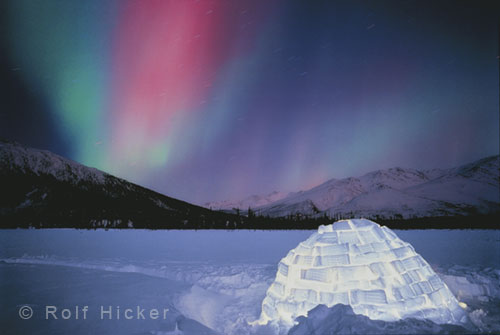
Do you know about the aurora? Aurora is a natural phenomenon of luminescence light in the sky. Usually, the aurora will be visible only at night and occur in the polar regions. Both the north pole or south pole.
Aurora's happening in the north polar region is called the Aurora Borealis or commonly known as "Northern Polar Lights". This phenomenon occurs in September to October and in March to April. Aurora Borealis seen very clearly in the Arctic Islands north of Canada. Aurora Borealis name given by Pierre Gassendi in 1621. Derived from the word "aurora" which is the name of the Goddess of Dawn in Roman mythology and "borear" (in Greek) which means "wind from the north. Provided that the Aurora Borealis looks reddish or greenish glow from the north, as if the sun will rise from there.

In the southern polar region, the aurora is called Aurora Australis. The word "australis" comes from the Latin meaning "from the south". This phenomenon is called "Southern Polar Lights" has the same nature with the Aurora Borealis. However, the Aurora Australis visible only in Antarctica and a few places in Australia and South America. Especially the closest Antarctica.
Aurora is due to the interaction between the particles of the earth's magnetic field like electrons, protons, and other heavy particles with atoms and molecules found in the earth's ionosphere layers. Atom and particle emitted by the sun and are often called "solar wind".
Aurora comes with a variety of colors and shapes. Color variations due to the influence of atoms, ions, or molecules of constituent and also influenced by the level of solar wind activity. For example, ions or molecules give nitogen pink, green, sky blue, dark blue, or violet. Purple color also comes from neutral helium. Causing oxygen atoms scatter green and red colors. Meanwhile, the bright orange color comes from the neon. Aurora often appears to form a curtain that ran east-west direction or scattering of light. Sometimes, a quiet bow-shaped. In the form of a curtain, every curtain consisting of parallel light parallel to the direction of the magnetic field lines. It was impressive that the aurora is formed by the earth's magnetic field. Aurora forms can be changed by still hanging by the magnetism of the earth.

Not only on Earth


Aurora does not only happen on earth, but also can occur on other planets such as Venus, Mars, Jupiter, Saturn, Uranus, and Neptune. Cause the same as what happened on earth.
Jupiter and Saturn have magnetic fields stronger than the earth and also has a radiation belt is greater. Aurora of the two planets are observed by the Hubble Space Telescope. Aurora on Venus appears so bright and spread with various forms and intensity, sometimes spread to all over the planet. On August 14, 2004, SPICAM on Mars Express (a space exploration mission initiated by the European Space Agency) found an aurora on Mars. Precisely at Terra Cimerria, the coordinates of longitude 177 degrees east and latitude 52 degrees south. It is estimated that the aurora has a range of up to 30 km with an altitude of 8 km. Scientists suspect that the aurora emission associated with regions where the strongest magnetic field is localized. This is obtained after studying the map changes of magnetic surface is collected by the Mars Global Surveyor.
Not only the main course on the planet. Aurora can also occur on the planet escorts (satellite). Until now, the aurora can be observed only on Io, Europa, and which is Ganymade satellites of Jupiter with the Hubble Space Telescope.

Most Amazing

On 28 August and 2 September 1859, in the northern hemisphere, occurs aurora is most amazing, very bright and most extensive coverage. The incident was caused by large storms and the results geomagnetic be called the Aurora Storm.
By Balfour Stewart, the event was recorded by magnetografph at Kew Observatory, London. Then he published a paper to the Royal Society on 21 November 1861 which contained allegations that the aurora which occurred on 2 September 1859 is the impact of Carrintgon -Hodgson solar flare which occurred on 1 September 1859.
Besides Balfour Stewart, ship officers and newspapers in the U.S., Japan, Europe, Australia and even the aurora was also documented. As already reported one of the leading U.S. newspapers, the New York Times, that on Friday, 2 September 1859 occurred most amazing aurora can be seen very clearly from the city of Boston (USA). At the same time at Kew Observatory magnetograph noted geomagnetic storm for an hour.